Hello Lovely Font Review for Brand Designers
I was staring at a blank brand board for a local artisanal skincare line last Tuesday, trying to find the right voice for their visual identity. The client wanted something that felt personal and handcrafted but still retained an air of luxury. I scrolled through my library of Script Amp fonts, skipping over the overly rigid calligraphy styles and the messy brush scripts that never quite lined up. Then I loaded Hello Lovely. It wasn’t just another addition to my folder of Fonts; it immediately changed the mood of the canvas.
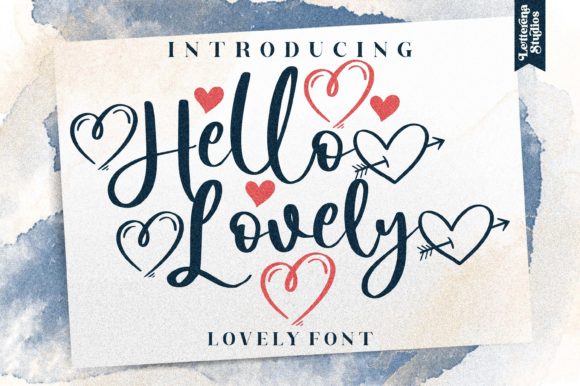
Hello Lovely is an elegant and flowing handwritten font that strikes a rare balance between approachable warmth and sophisticated charm. As a designer who has tested countless typefaces on everything from coffee shop signage to high-end boutique logos, I can say this premium font stands out because it feels alive. It maintains its classy calligraphic influences while feeling relaxed enough for modern branding. In this review, I will share how this creative font performs in real-world design assets and why it might be the missing piece in your next project.
The Visual Personality of Hello Lovely
When you first type out a word in Hello Lovely, the immediate impression is fluidity. The strokes connect with a natural rhythm that mimics actual handwriting, avoiding the robotic uniformity that plagues many digital script fonts. The letterforms have a gentle bounce, creating a baseline that feels organic rather than strictly grid-bound. This makes it an excellent choice for logo design where you want to convey authenticity and human touch.
What truly sets this typeface apart is its PUA encoding. For those who spend hours tweaking glyphs in Illustrator, this is a game-changer. PUA encoding means you can access all of the glyphs and swashes with ease directly from your keyboard or character panel, without needing complex OpenType feature toggles. I tested this extensively while designing a monogram for the skincare brand. Being able to swap out terminal swashes and alternate characters instantly allowed me to create a custom-looking logotype in minutes rather than hours. This level of control is essential for professional brand identity work, where uniqueness is paramount.
Performance in Packaging and Print Design
I applied Hello Lovely to a mockup of a serum bottle label to see how it held up in a physical context. On small-scale packaging design, readability is always a concern with handwritten styles. Fortunately, the x-height of Hello Lovely is generous enough to remain legible even when scaled down, provided you keep the text short. It works beautifully as a display element for product names or key ingredients, drawing the eye without overwhelming the minimal layout.
For business cards and thank-you notes, the font adds a layer of intimacy. I paired it with a clean, geometric sans serif font for the contact details. The contrast between the structured sans serif and the flowing script created a balanced visual hierarchy. The script acted as the emotional hook, while the sans serif provided the necessary informational clarity. This combination is a classic strategy in editorial design and print collateral, and Hello Lovely executes it with grace. However, I would advise against using it for long paragraphs or small body text. Its intricate connections become muddy at tiny sizes, so reserve it for headlines, quotes, or accent text.
Digital Applications and Web Presence
Moving to digital spaces, I tested the font on a website hero section and several social media templates. In web design, loading speed and rendering quality are critical. Since Hello Lovely is available in standard web-friendly formats, it integrated smoothly into the site’s CSS. On large screens, the delicate hairlines of the font shine, adding a touch of elegance to the homepage banner. It captures attention immediately, serving as a strong focal point above the fold.
For social media graphics, particularly Instagram stories and Pinterest pins, the font’s aesthetic is highly shareable. Lifestyle brands, wedding planners, and boutique retailers can use it to overlay short, inspiring quotes on photography. The natural flow of the letters complements organic imagery, such as floral arrangements, soft textiles, or natural light portraits. It enhances the perceived value of the content, making simple posts feel more curated and professional. Just ensure there is sufficient contrast between the font color and the background image to maintain accessibility standards.
Pairing Advice and Design Versatility
One of the most common questions I get is how to pair a distinctive handwritten font like this. Hello Lovely is versatile, but it thrives when supported by neutral companions. I found the best results pairing it with modern, low-contrast sans serifs. Think of typefaces like Montserrat, Lato, or Open Sans. These provide a stable foundation that lets the script breathe. Avoid pairing it with other decorative scripts or overly ornate serif fonts, as this creates visual competition and reduces overall impact.
If you are working on a modern typography system for a cafe or a creative studio, try using Hello Lovely for the main logo mark and a sturdy serif font for taglines. This juxtaposition of old-world elegance and contemporary structure appeals to a broad audience. It signals that the brand is rooted in tradition but operates with modern efficiency. This flexibility makes it a valuable asset in any designer’s toolkit, suitable for diverse industries ranging from hospitality to beauty.
Limitations and Licensing Considerations
While Hello Lovely is a standout commercial font, it is not a one-size-fits-all solution. It is best used as a display font or accent font. Do not attempt to use it for legal disclaimers, lengthy articles, or corporate annual reports. Its personality is too strong for neutral information delivery, and readability suffers in dense blocks of text. Always test your specific use case at the intended size before finalizing any client work.
Before deploying this font in any project, always review the licensing agreement. Whether you are creating merchandise, digital products, or print-on-demand items, ensuring you have the correct commercial license is crucial. Most premium fonts offer different tiers for personal, commercial, and enterprise use. Respecting intellectual property rights protects both you and your clients from legal issues down the line. Check the foundry’s website for detailed terms regarding webfont usage and app embedding if your project extends beyond static images.
In conclusion, Hello Lovely delivers on its promise of elegance and ease. Its PUA encoding simplifies the workflow, allowing designers to focus on creativity rather than technical hurdles. Whether you are refreshing a local restaurant’s menu or launching a new handmade shop, this font offers the perfect blend of class and approachability. It is a thoughtful addition to your collection of design assets, ready to elevate your next branding project with genuine style.